October 29th, 2009 - 1:31 pm ICT by sampurn
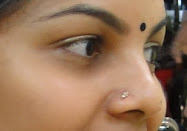
Indo-Americans have urged Bountiful Junior High School in Utah (USA) to apologize to its student (and her parents) who was reportedly kicked out of school for nose piercing, alleging violation of school dress code.
Indo-American statesman Rajan Zed, in a statement in Nevada (USA), said that this student was apparently honoring the tradition of her father, who was reportedly from India, by putting a stud in her pierced nose. Nose piercing and nose ornaments had been a tradition of women of India for centuries and the Hindu goddesses had been depicted wearing nose ornaments.
It appeared to be discrimination. It was denying the right to this teenager to express her religious and cultural identity freely, who appeared to sincerely believe that wearing a nose stud was part of her religion and culture. School should admit its mistake and amend the dress code accordingly, Zed, who is the chairperson of Indo-American Leadership Confederation, argued.
Rajan Zed further said that they respected the school dress code policy as long as it did not violate the traditions and beliefs of the pupils. Noses of girls in India were usually pierced around puberty and it reportedly found mention in ancient Ayurvedic text. Old architecture and paintings of India depicted the presence of tradition of nose ornaments and Indian poets had been singing their praise. It appeared that the student was penalized for her beliefs.
Brent Stephens is the principal of the School which is part of Davis School District (Farmington, Utah), whose Mission Statement includes “adapt to our diverse and changing world” and part of its Belief Statement says: “Understanding and acknowledging the value of cultural and individual diversity enriches the learning environment and is essential to an interdependent, caring society.” Dr. W. Bryan Bowles is the superintendent.
-Sampurn Media
More at : Student kicked out of school in USA for wearing traditional nose stud http://www.thaindian.com/newsportal/entertainment/student-kicked-out-of-school-in-usa-for-wearing-traditional-nose-stud_100267099.html#ixzz0dp54ToCZ
Search for more information about nose piercing here!

Custom Search

Showing posts with label nose pierce. Show all posts
Showing posts with label nose pierce. Show all posts
Wednesday, January 27, 2010

Tuesday, December 22, 2009
More about Nose Rings and its health benefits
Nose piercing and nose rings were mentioned in olden manuscripts and Vedic Scripts, which dates back to 6000 years. In the west, nose piercing first appeared among the hippies who traveled to India India in a mass scale, specifically to the western coastline and Goa, used to get this novelty items from India
It is said that Ayurvedic (The oldest Vedic scripts that refer to Medicine and part of Vedic Resources) medicine associates nostril's piercing location with the female reproductive organs. That's why you need get the ear pierced by an experienced goldsmith, who knows by touching the skin, whether or not any nerve pass through the specific portion. While piercing the ear or nose, no passing nerve system should be disturbed or wounded, hence much care has to be taken for piercing. which is divided into many chapters, states. Ayuveda, which is part of the Indian Vedic Scripts, states that Nose too linked with the female reproductive organs; accordingly the nose piercing is supposed to make childbirth easier and lessen period pain during women's natural menstrual couse and periods.
Certainly, the ancient Sages and Saints had a far better mode of understanding anatomy & the human body's nature, functions, plus and minus points of daily behavioral patterns etc. And that too, without having a computer and scanners! Their advanced knowledge in every particle of this universe was the one that they had the enormous power to control everything... absolutely everything from their breath to body to mind and what not? Modern days telepathy system was conceived & practiced during the Vedic era. And to know about the human body mechanical system did they lag behind? Astonishingly, the practices of yester years bring more merits to their customs than just wondering.
Nose Rings (Mukuthi)
Nose rings / Nose pierce / mukuthi / mookuthi first made their appearance when the mughals ruled India. These nose rings / mukuthi not rings in the real sense of the word. They were minute ornamental patterns depicting a tiny flower with a thin stem, which entered the left nostril, and was held in place by a screw on the inside. These were sometimes decorated with delicate chains or fragile pendants.
The nose rings / mukuthi were made either of gold or diamond and were in the form of a small ball or a small flat disc. The type of nose ring is determined by the area to be adorned.
If it is the nostril, studs are common, if it is the septum, a circular barbell is worn and if it is the bridge of the nose between the eyes, a straight barbell adorns the nose.
Sometimes the Septum rings are so large that they cover a portion of the mouth and often come in the way while eating. The nostril rings also vie for attention. Some of them are so heavily ornamented with pearls and precious stones that they have to be supported by fine chains, which are attached to the hair. The Bulak which is quite common in Madhya Pradesh is a perfect example of this.
Stainless steel, 14\18 carat gold, titanium, nickel or niobium are the metals that nose rings / mukuthi are generally made from. Nickel can cause allergic reactions often in the form of rashes or sensation of burning around the area of the nose ring / mukuthi. So remember, if it does not suit you, do consider an alternative metal. Sometimes, gems are glued on to the nose rings. The chances are that the gems will fall out sooner or later, so ensure that they are mechanically set.
Stainless steel, 14\18 carat gold, titanium, nickel or niobium are the metals that nose rings / mukuthi are generally made from. Nickel can cause allergic reactions often in the form of rashes or sensation of burning around the area of the nose ring / mukuthi. So remember, if it does not suit you, do consider an alternative metal. Sometimes, gems are glued on to the nose rings. The chances are that the gems will fall out sooner or later, so ensure that they are mechanically set.
Strangely enough, calves are also made to wear nose rings / mukuthi. However, the purpose is not ornamental. They are meant to successfully wean the calf. The nose rings / mukuthi interfere with the feeding process frustrating both the calf and the cow. When this happens often, the calf gets used to the idea of not being able to feed and is successfully weaned without going through the trauma of separation.
Can I Wear My Nose Ring to the Interview?: A Crash Course in Finding, Landing, and Keeping Your First Real Job

Take Out Your Nose Ring, Honey, We're Going To Grandma's!: Hanging In, Holding On And Letting Go Of Your Teen

The Bulbul's Ruby Nose-ring and Other Stories

Monday, December 21, 2009
Nose Rings (Mukuthi)
 Although nose rings / mukuthi are very common in India, they actually originated in the Middle East. It was only during the 16th century that the practice of piercing the nose filtered into India, for ancient Indian civilization has not recorded any evidence of its existence either in the sculptures at Ajanta and Ellora, the excavations of Harappa and Mohenjadaro or during the reign of the Kushan and Gupta dynasties. Nose rings / mukuthi seem to be associated with the Hindu religion itself. However, the fact that Muslim ladies and children also wear nathunis (nose rings) belies the fact at least to a certain extent.
Nose rings / mukuthi first made their appearance when the mughals ruled India. These nose rings / mukuthi not rings in the real sense of the word. They were minute ornamental patterns depicting a tiny flower with a thin stem, which entered the left nostril, and was held in place by a screw on the inside. These were sometimes decorated with delicate chains or fragile pendants.
The nose rings / mukuthi were made either of gold or diamond and were in the form of a small ball or a small flat disc. The type of nose ring is determined by the area to be adorned.
If it is the nostril, studs are common, if it is the septum, a circular barbell is worn and if it is the bridge of the nose between the eyes, a straight barbell adorns the nose.
Sometimes the Septum rings are so large that they cover a portion of the mouth and often come in the way while eating. The nostril rings also vie for attention. Some of them are so heavily ornamented with pearls and precious stones that they have to be supported by fine chains, which are attached to the hair. The Bulak which is quite common in Madhya Pradesh is a perfect example of this.
Stainless steel, 14\18 carat gold, titanium, nickel or niobium are the metals that nose rings / mukuthi are generally made from. Nickel can cause allergic reactions often in the form of rashes or sensation of burning around the area of the nose ring / mukuthi. So remember, if it does not suit you, do consider an alternative metal. Sometimes, gems are glued on to the nose rings. The chances are that the gems will fall out sooner or later, so ensure that they are mechanically set.
Stainless steel, 14\18 carat gold, titanium, nickel or niobium are the metals that nose rings / mukuthi are generally made from. Nickel can cause allergic reactions often in the form of rashes or sensation of burning around the area of the nose ring / mukuthi. So remember, if it does not suit you, do consider an alternative metal. Sometimes, gems are glued on to the nose rings. The chances are that the gems will fall out sooner or later, so ensure that they are mechanically set.
Strangely enough, calves are also made to wear nose rings / mukuthi. However, the purpose is not ornamental. They are meant to successfully wean the calf. The nose rings / mukuthi interfere with the feeding process frustrating both the calf and the cow. When this happens often, the calf gets used to the idea of not being able to feed and is successfully weaned without going through the trauma of separation.
Subscribe to:
Posts (Atom)
SCREW TYPE NOSE PIERCE (MUKUTHI)

PREFERRED BY INDIANS
PIN TYPE NOSE BONE

EASY TO USE!